When it comes to not overspending, it pays to look at your recurring bills and expenses so that you don’t end up paying more every single month for nothing. These are what we call “leaky buckets” in personal finance, and it often trips most people up.
Your telco / broadband / Internet bill is one of them.
There’s a ton of folks still paying $30 – $40 a month on older SIM-only plans when a newer $15 plan might meet their needs. That’s $180 in potential annual savings from one recurring bill, and that’s just from 1 mobile line! Review for your entire household, and you’ll likely save even more like we did.
Background

When I signed my husband up for a new SIM-only plan 2 years ago, we chose a mid-tier option that capped his bill at under $40 for his mobile line and $39 for broadband. Given our business needs, most of the cheapest entry plans then didn’t work for us, but what I didn’t anticipate was that he would add on a whole bunch of other services (especially roaming data and caller ID) that drove the bill much higher. You can imagine my shock when I found out last month!
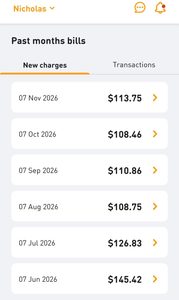
Most people I know often leave their phone plans untouched for years like my husband did, and as you can see, this is a costly mistake because rates have come down significantly (between 30% to 50%) in the last few years alone. As the plans today are even more competitive than the ones before, I did an overhaul of our family’s entire plans to make sure we won’t be paying excessively as we enter 2027.
So if you haven’t reviewed your telco / broadband plan in some time like us, it is worth undertaking this exercise now.
Consider switching to a no-contract, SIM-only plan
This is one of the biggest personal finance hacks when it comes to your telco plan. Given the competitive offerings out there right now, there’s little reason to be on a contract plan anymore – unless you’re a business user who can file for expense claims (and your boss doesn’t reward you for saving money for him) or if you really want to get a new flagship phone and pay in instalments through a 24-month contract.
Most SIM-only plans cost below $25 a month these days, which are a fraction of what most Singaporeans are used to paying on a 2 or 3-year contract plan.
And the biggest perk of a SIM-only plan is that you’re not locked in, which gives you the freedom to try out different telcos to see what fits your lifestyle habits best, or change to a better plan when you find one.
I made the switch to a MVNO (Mobile Virtual Network Operator) when it took off in the Singapore market in 2016, and I’ve not looked back since. If you didn’t already know, MVNOs are wireless service providers that sell mobile phone and data services under its own brand, without owning the physical cellular network infrastructure like cell towers or radio spectrum. In recent years, our incumbent 3 telcos (Singtel, Starhub, M1) have even launched their own MVNO brands to compete in the market.
And ever since Singapore made number porting mandatory, we don’t have to worry about losing our default number anymore when we switch providers!
How Singapore’s internet landscape works
Singapore’s open-access national fibre network means high-speed internet here is extremely competitive, so prices have come down significantly within the last decade. How much you need to pay will depend heavily on whether you choose a budget MVNO or a traditional telco.
- MVNOs like VIVIFI, Circles.Life, and Zero1 basically rent capacity from the 3 incumbent networks i.e. Singtel, StarHub, and M1 to offer connectivity at lower prices.
- These days, there’s also digital-first sub-brands like GOMO / Hi by Singtel and which operate directly on their parent network.
Yet, most Singaporean households still pay $100 – $200 a month on their telco bills simply because they’ve not reviewed their plans in years or are simply too lazy to switch. There’s a good chance that your telco may have already dropped the prices on your equivalent plan today without informing you either (like mine did).
Note: So if you signed a telco contract a few years ago, you’re quite likely still paying the rates from before – which were at least 30% higher than what they cost today. Haven’t reviewed your telco options since 2022? You’re most likely overpaying.
Comparing Singapore’s SIM-only plans
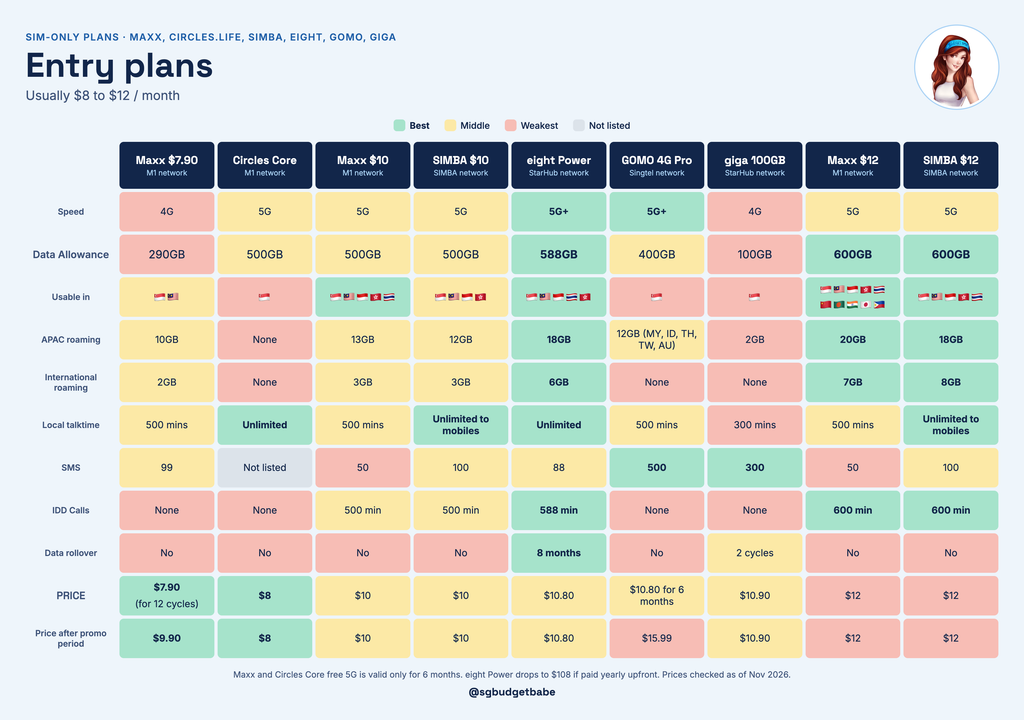
To help us compare side-by-side, I made a comparison table – feel free to use this if you find it helpful!
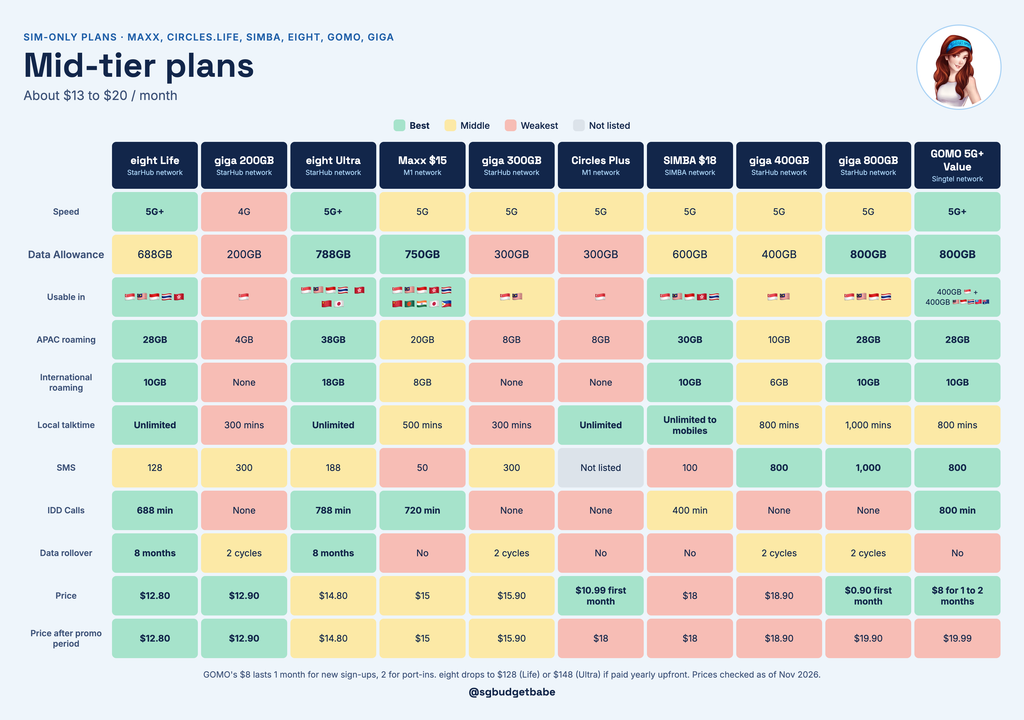
If you require local talktime for work and higher entitlements for roaming data overseas, then the higher tier plans ($19 and up) will likely be more suitable.
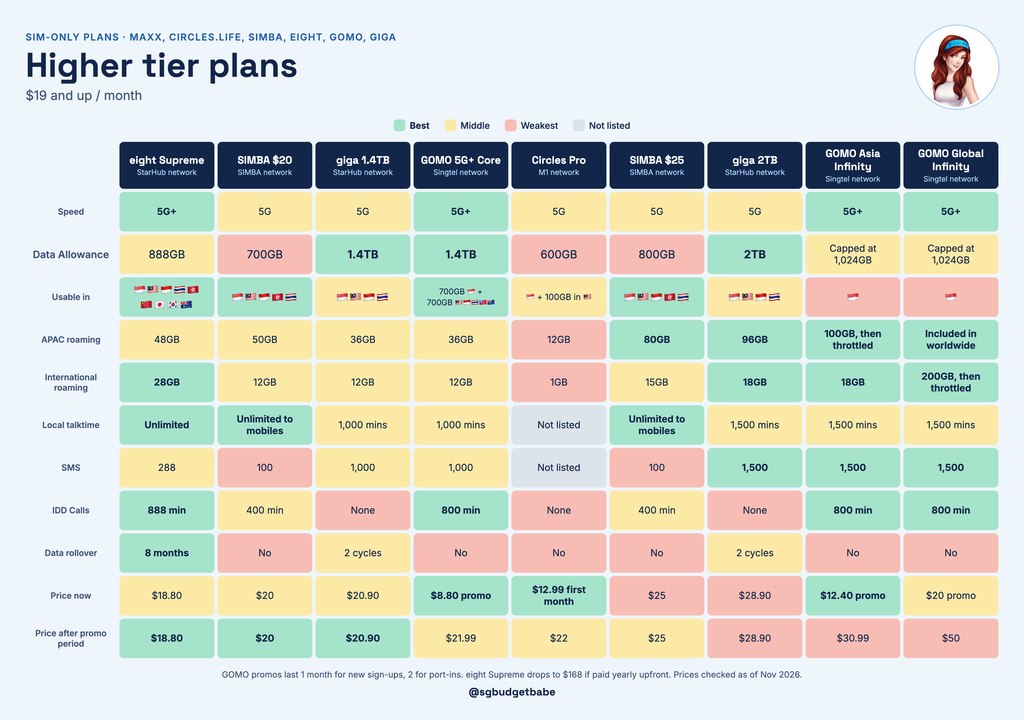
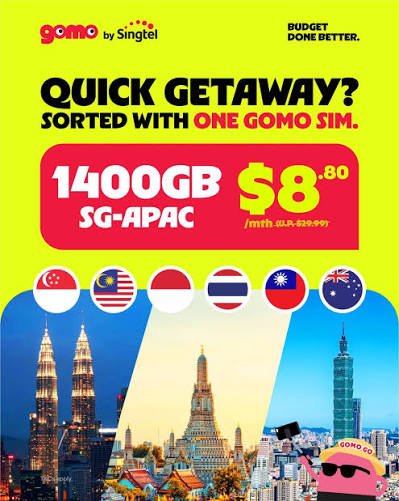
Ad: Need more data for your work and streaming / gaming needs? GOMO’s 1400 GB plan means you never have to worry, even when you’re travelling overseas! Use promo code SGBB to get it for just $8.80 for the next 2 months while you try it out to decide if it’s worth keeping.
What should we actually be paying for in a mobile plan?
As you can see, it can be hard to directly compare mobile plans since each tries to differentiate themselves from the competition by offering different features, which is why there’s no clean way to compare them side-by-side.
So here’s a checklist for you to match against your needs instead:
- Local data allowance
- Network reliability
- Local talktime and caller ID fees
- Overseas roaming – for if you travel often
- Your actual recurring price
Your needs take center priority, and that’s why you’ll find online that different users feel differently towards different telcos. For instance, someone who commutes to work/home via underground MRT lines may find their signal dropping often, while others who live/work in areas like Tengah or Tuas often report certain telcos having limited connectivity there. In contrast, GOMO, VIVIFI and Zero1 all use the Singtel infrastructure network, which has the strongest indoor and MRT tunnel coverage – but if you’re mostly outdoors and in central areas then you would hardly know what you’re missing.
If signal strength and stability matters to you, I generally find Opensignal report data helpful, as they break down the overall experience in terms of games, video apps, download speeds and upload speeds.
I don’t believe there is a “best telco” in Singapore, although some sources say otherwise (and their verdict is often Singtel). I care more about finding an affordable plan with features that I will actually consume, without ripping off my wallet each month through add-ons (e.g. caller ID) that I have to pay for.
Case study: Budget Babe’s household
As much as I’d love to go for the cheapest, entry-level plan, I soon realised that many of them do not have features that are considered essential for our work and travel.
For instance, you guys would already know by now that I host a lot of Zoom webinars, so I need a stable internet connection that is less likely to fail on me. I also upload a lot of videos on my social media, so upload speed also matters! And since I receive a lot of work calls on my phone (from clients who call me from their office landlines), having sufficient local talktime and caller ID is a must.
My current telco has also been charging me $5 every month for caller ID, so that was another reason to switch to a provider where caller ID is included for free.
How much data is sufficient?
You might be wondering if going for “unlimited data” plans is worth it. The best way to confirm this would be to first check on your own data usage under Settings, because reviewing my actual data consumption helped me realise that I didn’t need unlimited data, nor did I need data rollover (hi! by Singtel and eight on Starhub offers this).
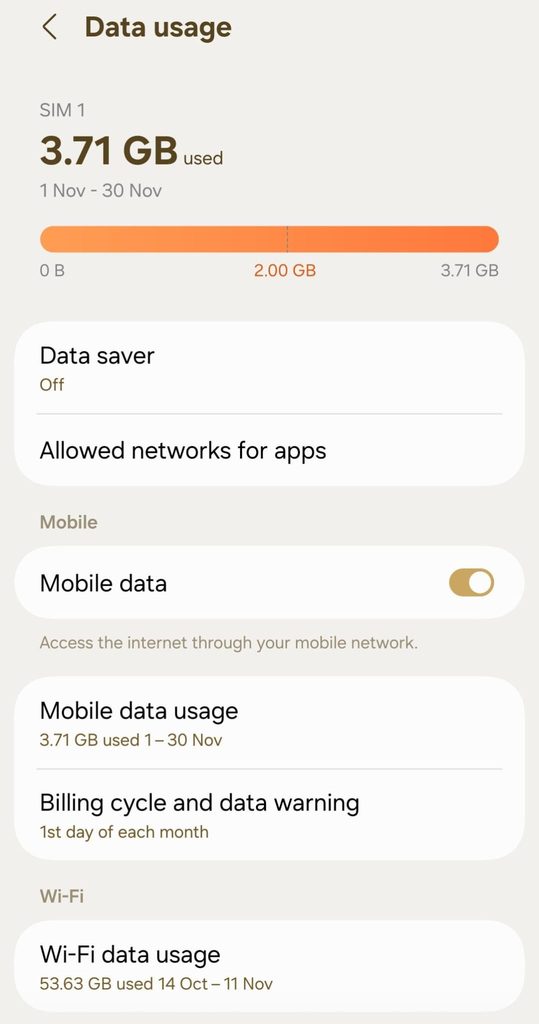
As I’ll be travelling more often next year, I also need a plan with wider worldwide destination coverage – ideally with one that includes data in the US and Europe so I don’t have to worry about buying and installing eSIMs before I fly.
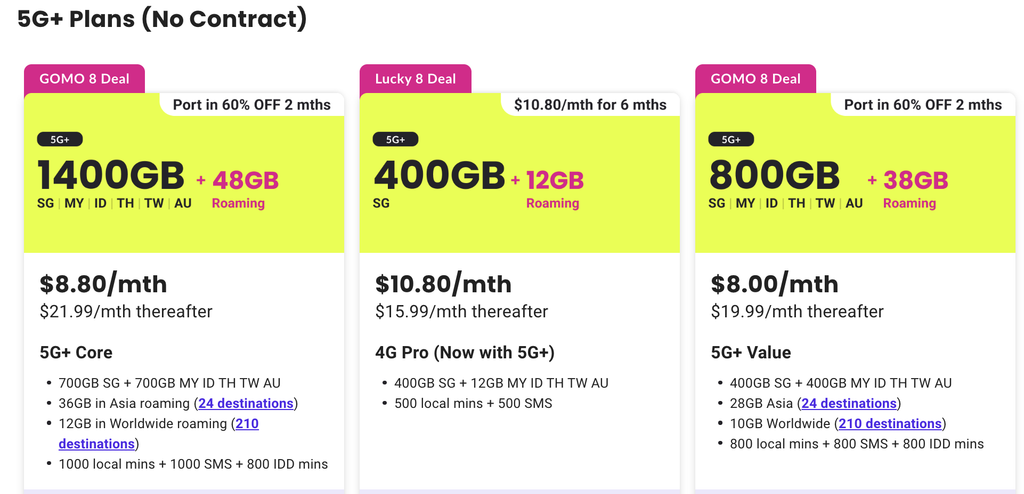
If you travel frequently, look beyond your Singapore data allowance!
Another common trap is when you end up having to pay separately for data roaming because your telco doesn’t offer it in your plan, particularly if you frequently travel to Malaysia, Thailand, China or elsewhere like we do.
This was my husband’s mistake this year – and also my oversight for not stepping in sooner to review his telco bills.
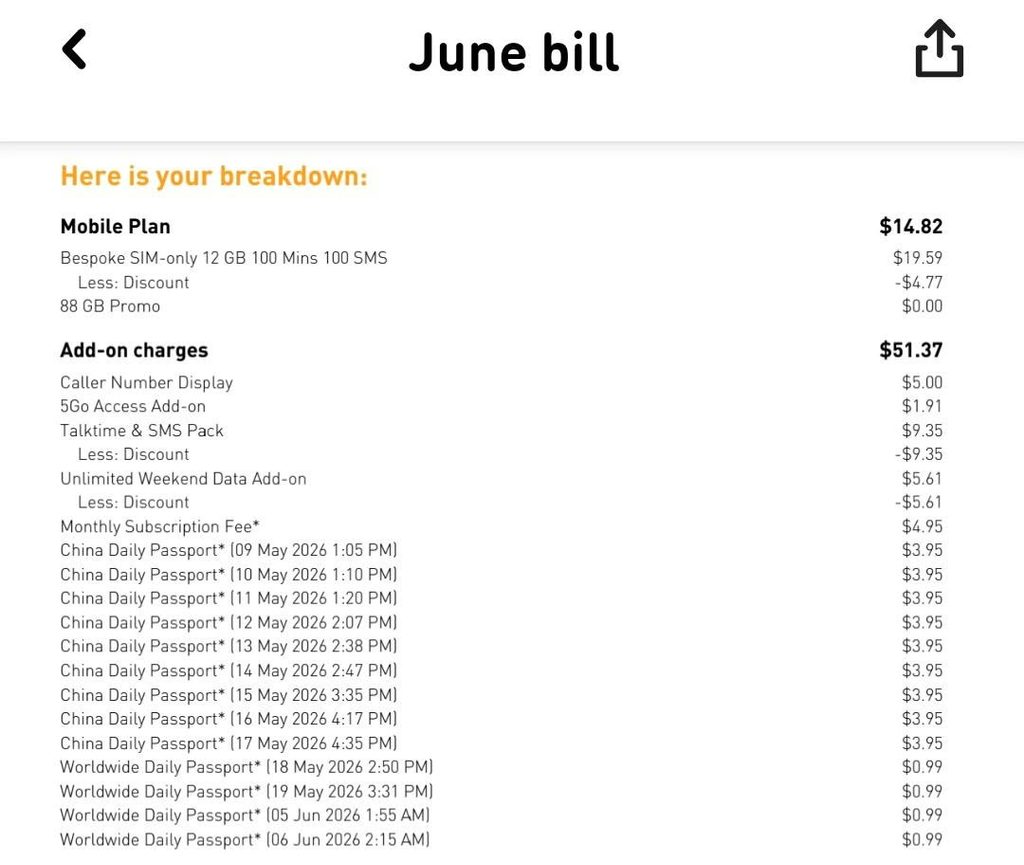
And even for months where he only travelled into JB to pump petrol or to meet friends for supper, he ended up paying close to $20 extra each month just for roaming data so he could continue to use his Whatsapp and Google Maps for navigation.
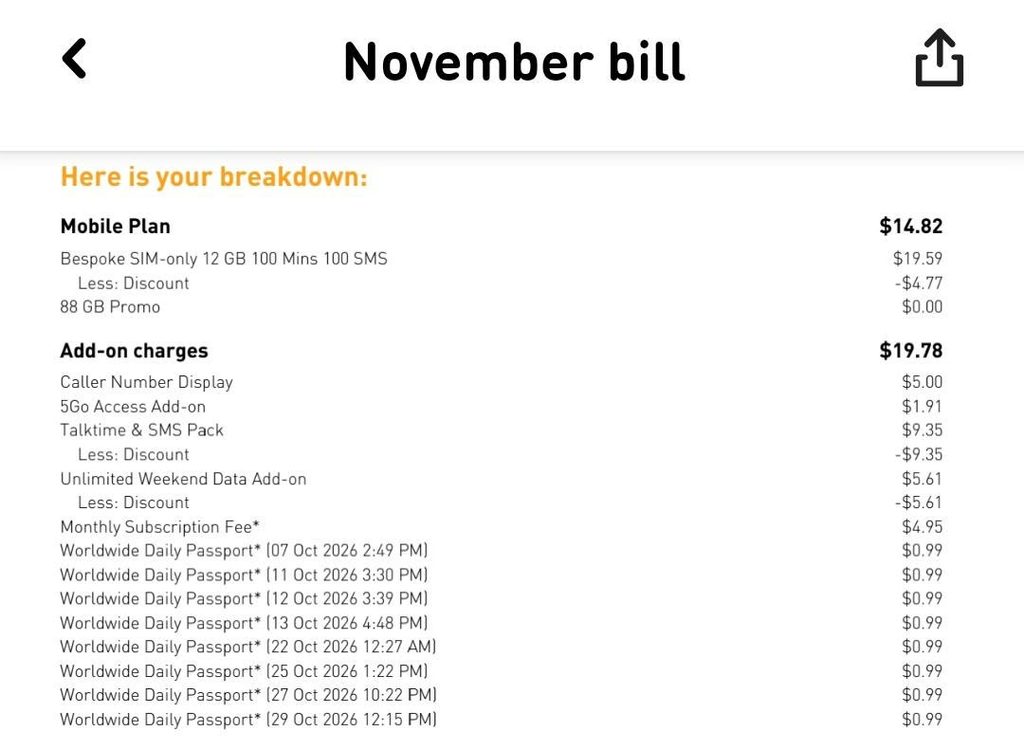
That’s enough for another main line subscription these days, so we decided to switch him to GOMO instead, as their regional data and roaming coverage across 210 worldwide destinations better serves him while he pays less.
Check what your parents are paying too!
Of course, while you check your plans, it is also worth reviewing whether your parents are overpaying for their telco bills as well. Most telcos now offer attractive seniors-only plans, so it is easy to get one for just $6 – $12 / month these days.
Although we no longer live with our parents, we found that they’re eligible for many senior-plans, and I asked my in-laws to check out GOMO’s plans, which start from as little as $6 – $8 a month (that’s a real steal!):
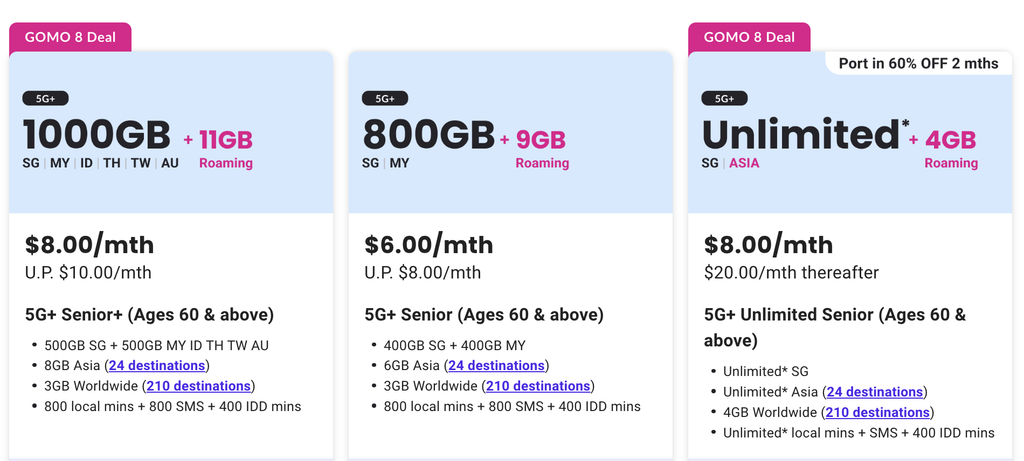
We were initially tempted by some seniors-only plans which offered unlimited data as a hook, until I pointed out that they’ll be unlikely to use it up since they only travel overseas 1 – 2 times a year.
Should I get a no-contract broadband plan?
While reviewing our mobile plans, I noticed that some telcos bundle broadband together for an even bigger discount.
While no-contract plans for mobile telcos are my go-to, I’ve realised that the same doesn’t apply to broadband plans!
That’s likely because due to the set-up cost and effort required for broadband installations, no-contract plans generally are priced significantly higher per month. And across the different providers I looked at, I found that the most cost-effective plan is often the 24-month contract.
The only time the 24-month contract wouldn’t make sense is if you foresee yourself leaving Singapore before then and you’re trying to avoid the early termination fee of up to $300.
Also, note that some telcos will market a cheap upfront broadband package only to charge you fees for additional (but required) services, which then defeats the original savings you thought you got. So make sure you watch out for any chargeable add-ons as well, with the most common ones being:
- a $61.04 surcharge for NLT (NetLink Trust) service activation
- over $160 for a Optical Network Terminal (ONT)
What we eventually switched to
After reviewing across several providers, we eventually settled on GOMO’s 5G+ Value plan + their broadband for the following reasons.
First of all, having a fast and reliable network was our top priority, so we prioritised digital-first sub-brands over MVNOs that don’t own their own network infrastructure. Some plans also come with potential deprioritization during heavy congestion, so that was something we took into account.
Next, we wanted one that wouldn’t charge us for caller ID, and included roaming data to at least Malaysia, especially given how often we drive in.
Local talktime was another feature we needed, given the nature of our work and the business calls we take. But since we generally avoid picking up IDD calls while overseas, we eliminated plans with IDD support.
Lastly, since we already know that we’ll be travelling beyond APAC next year, we looked up prices of eSIMs for the countries that we’ll be going to and checked against the local telco plans that included roaming data for these destinations.
Mobile Plan
I went for the 5G+ Value plan by GOMO ($8 now, reverts to $19.99 after promo period) because:
Outside of these countries, there’s 28 GB for Japan / Korea / Vietnam / Bangkok, and 10 GB for 210 destinations including US and Europe which we’ll likely be in next year.
800 GB is more than sufficient for me to use in Singapore, and I like that this is shared with usage in Malaysia, Indonesia, Thailand, Taiwan and Australia.

If you use more data than we do, then the 5G+ Core (1400 GB regional + 48 GB roaming) would be of better value since it costs just an extra $2 but unlocks more bandwidth. Lifestyle and travel influencers will probably find this a better pick.
Otherwise, a cheaper option would be the $10.80 4G Pro (Now with 5G+) plan if you’re only driving into JB and don’t have any longer trips or stays planned in the region. That way, 12 GB should thus be more than sufficient, and $10.80 for the next 6 months (reverts to $15.99 after) is a pretty good deal.
Broadband
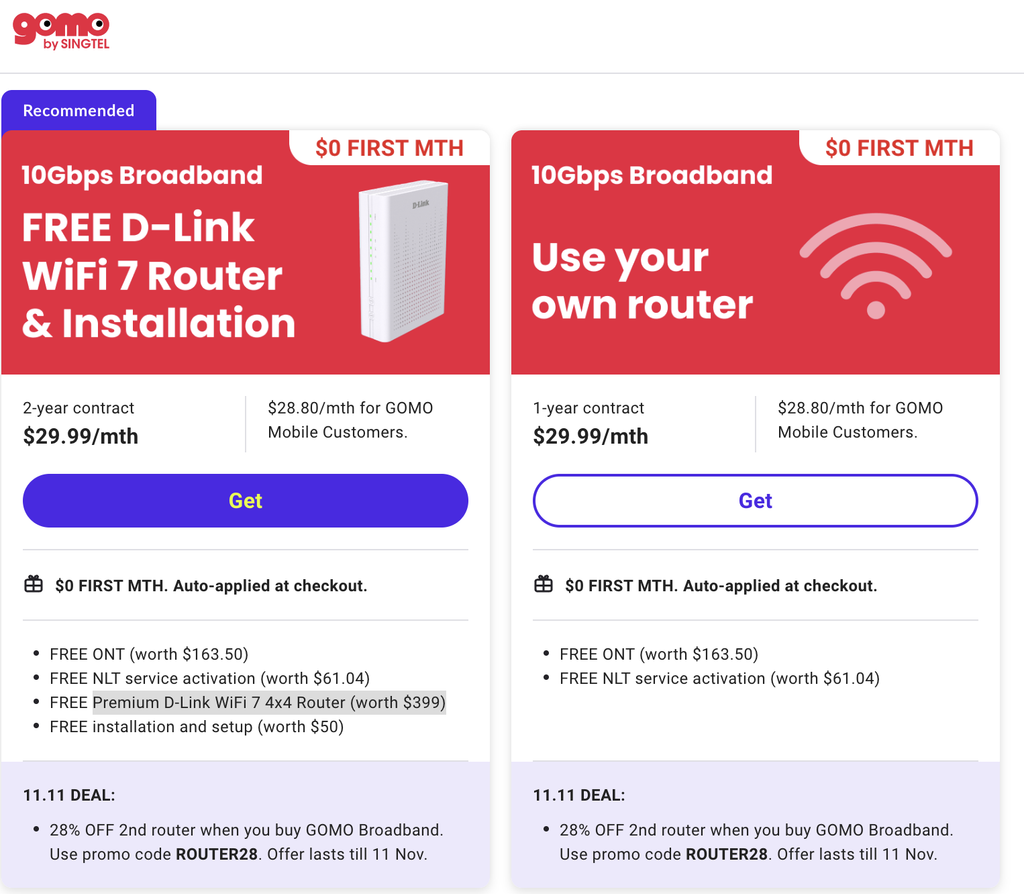
Since we needed to upgrade our home router, we decided to combine this with GOMO’s broadband plan. It was a no-brainer given that GOMO’s 10 Gbps broadband plan is cheaper than our old one (even with a renewal discount), plus we get to replace our old router at the same time.
What’s more, it was the best deal we saw given that the the ONT and NLT charges are waived off, on top of giving $0 for our first month! That works out to be a total of $662.40 for the next 24 months, which works out to be 25% cheaper than what we paid for our current broadband plan in the last 2 years.
Pro tip: Bundle your mobile + home broadband for more savings!
Some telcos offer even better rates when you get both your mobile plan and home broadband from them, helping you stretch your household budget further.
For instance, if you switch your parents’ broadband and combine it with GOMO’s mobile plans, you can bring your combined total down to just ~$35 per month!
Sponsored Message:
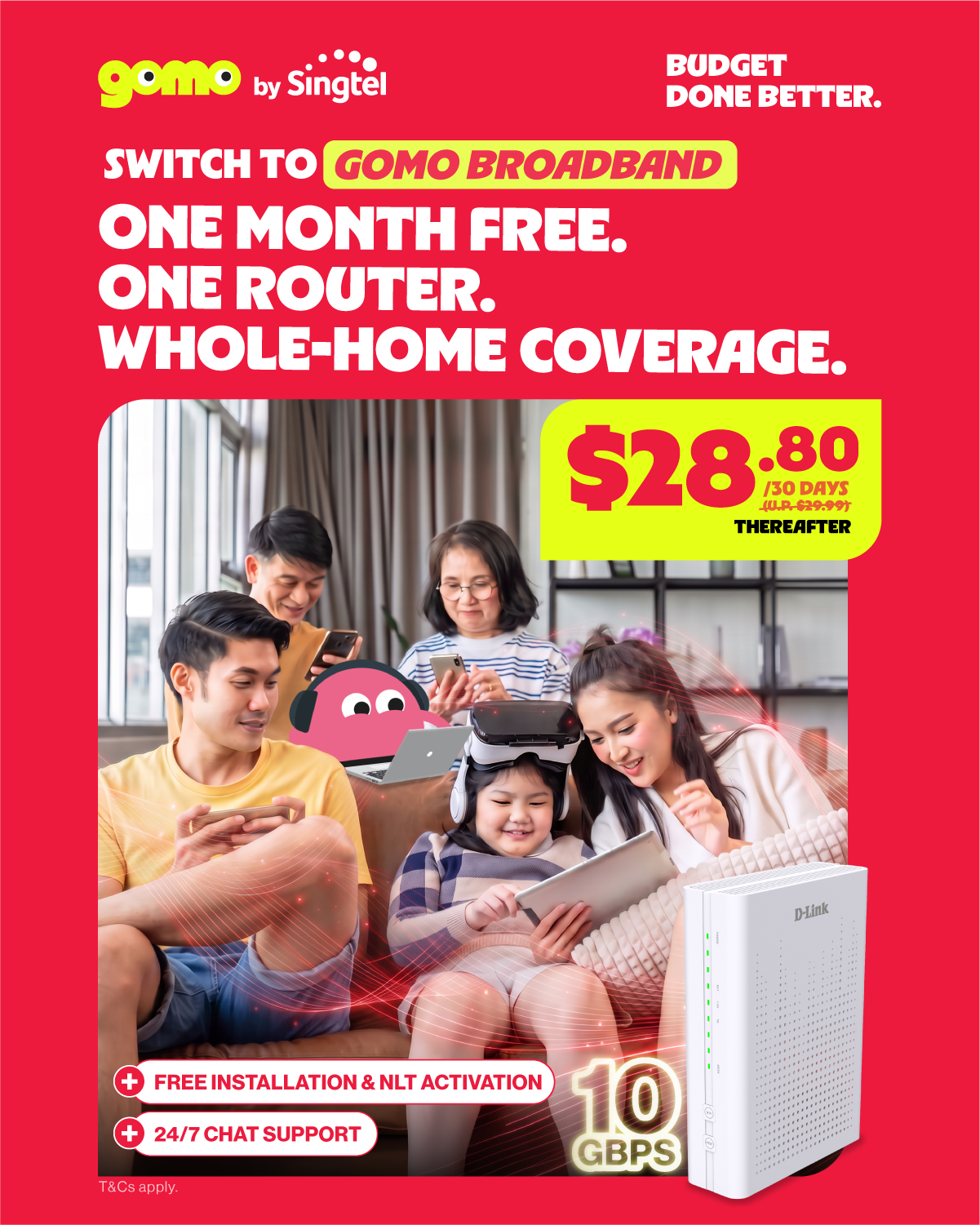
GOMO is backed by Singapore’s #1 network and comes with the widest worldwide destination coverage you can get at 210 destinations! What’s more, you get 24/7 live chat support and can pop into our retail stores if you need extra assistance.
Your home broadband deserves a budget check too, so GOMO is making home connectivity more affordable with 10Gbps Fibre Broadband plans! No need to worry about sneaky fees (ONT / NLT charges) either as they’re all already included in your plan.
Exclusive for Budget Babe readers: Get 60% off all GOMO 5G+ plans* for the next 2 months when you key in promo code SGBB.
*excludes the already discounted seniors / student plans.
TLDR
In summary, here are the key takeaways I’ve learned from reviewing our telco and broadband plans this time:
- Switch to SIM-only mobile plans for greater savings
- Don’t forget to factor in how much roaming data and local talktime you’ll need.
- Unlimited / rollover data sounds good, but most people never end up using it anyway, so don’t fall for the marketing headline.
- Check if the provider offers a bundle deal / discounted prices for broadband too!
- Be careful of sneaky add-on fees, like caller ID / ONT / NLT service activation
- Consider replacing your home Wi-Fi router every 2 – 4 years, especially if you’re paying for a fast plan (e.g., 500 Mbps or 1 Gbps) but your old router has outdated Wi-Fi standards (like Wi-Fi 4 or Wi-Fi 5)
Now that I’ve seen how much it cost us in the last 2 years since I didn’t review my husband’s bill earlier, I’ve now tasked my AI agent (Muse) to add it into my calendar to-do list every year.
And that’s how I’ve shaved over 50% off my husband’s mobile and broadband bill for the next 1-2 years.
That’s another personal finance win in the bag, helping us to stretch our household budget further.
Disclosure: This is a sponsored post brought to you in collaboration with GOMO. In full transparency, the decision to switch from my previous telco to GOMO was made before this article was even written.